


Piano Tuning Vienna
and Lower Austria
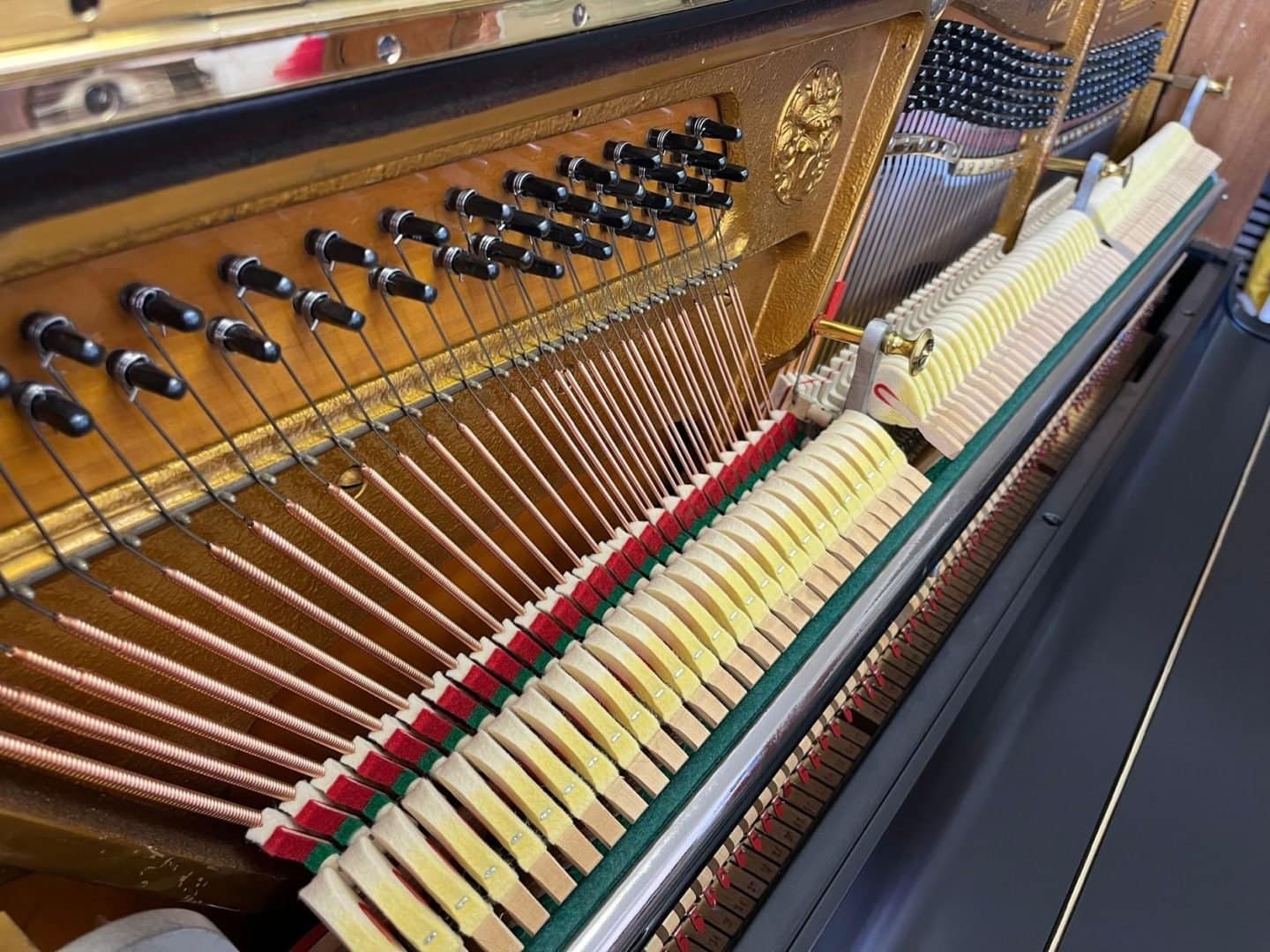
Over 220 strings, around 20 tonnes of tension on the frame, the same action 88 times over. We bring that back in order — upright and grand piano at the same price.
Why a piano
starts to beat
A note in the middle register has two or three strings. As long as they hold the same tension, they sound as one note. If they drift apart by half a hertz, a beat appears — the pulsing you hear as out of tune. The tuner counts that beat and pulls the string until it stands still.
First hold the note, then move the slider
- 220 strings
- Each one sits on its own tuning pin and is pulled individually.
- 440 Hz
- Concert pitch as the starting point, 442 Hz on request for orchestra and recording.
- 30 cents
- Beyond this deviation the instrument needs two passes instead of one.
The strings are drifting apart. The beating between them is exactly what you hear as out of tune.
The same thing on a real instrument
Two recordings of the same piano: the same passage, the same room, the same microphone — one before and one after the appointment.
- Beating
- Two strings half a hertz apart: one beat every two seconds.
- Threshold
- From about six cents apart, most listeners call a note out of tune.
Tuning, regulating, voicing
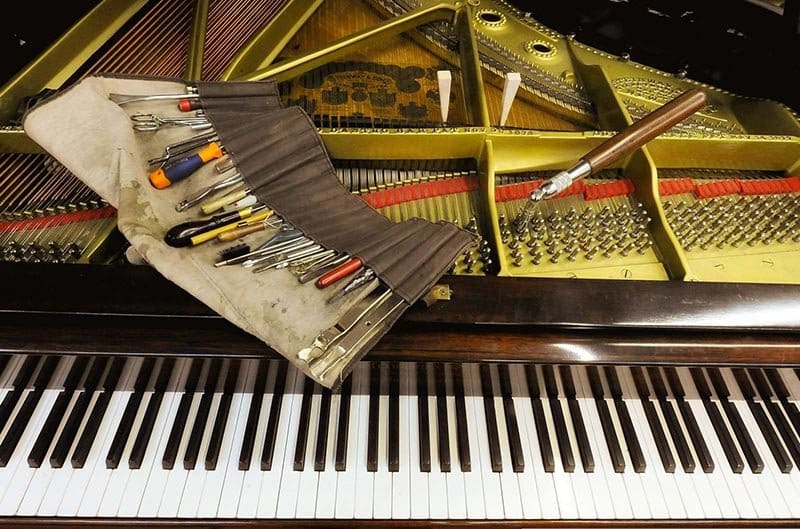
Tuning, regulating and voicing are often lumped together. They are three different jobs in three different places: on the strings, on the action, on the hammer felt.
What it is
Bringing the strings to pitch
In the treble a note has three strings, in the middle two, in the bass one thick wound string. Each sits on a tuning pin in the pinblock. An instrument is in tune when every unison sounds as one note and the intervals fit together across the whole keyboard.
How it is done
A first. Concert pitch is set, 440 Hz. From there the temperament is laid in the middle register.
Check fifths and thirds. Pure octaves alone do not carry; the beats have to grow evenly.
Unisons one by one. Mute two strings, pull the third, then bring them together until the beating is gone.
Set the string firmly. Past the pitch and back, so that the string does not drop off over the coming weeks.
What for
So that the instrument sounds together with itself and with others. And so that the ear does not learn wrongly: anyone practising daily on an out of tune piano gets used to intervals that do not exist.
When it is not enough
If the instrument sits more than about 30 cents flat, it needs two passes: a rough pitch raise, then fine tuning. We say that on site, before we start.
What it is
Making the action even again
Between key and string there are several thousand parts of wood, felt and leather — the same chain 88 times side by side. Felt compacts, leather flattens, wood moves with the air. Regulating means bringing every travel and every clearance back to the same measurement.
How it is done
Key height and key dip. All keys on one line, every dip to the same measurement.
Let-off. The point where the hammer is released sits just short of the string. Too early sounds dull, too late blocks.
Check and repetition. The hammer has to be caught safely and be ready again immediately.
Damping. All dampers lift together and land together, otherwise a note rings on.
What for
So that the touch has control: a real pianissimo, fast passages repeating cleanly, the same feel across all 88 notes. What players call heavy or uneven is usually regulation, not tuning.
When it is needed
Single keys sit lower, notes come twice, quiet playing drops out. On heavily played instruments we say openly when the work is no longer worth it.
What it is
Setting the tone colour at the felt
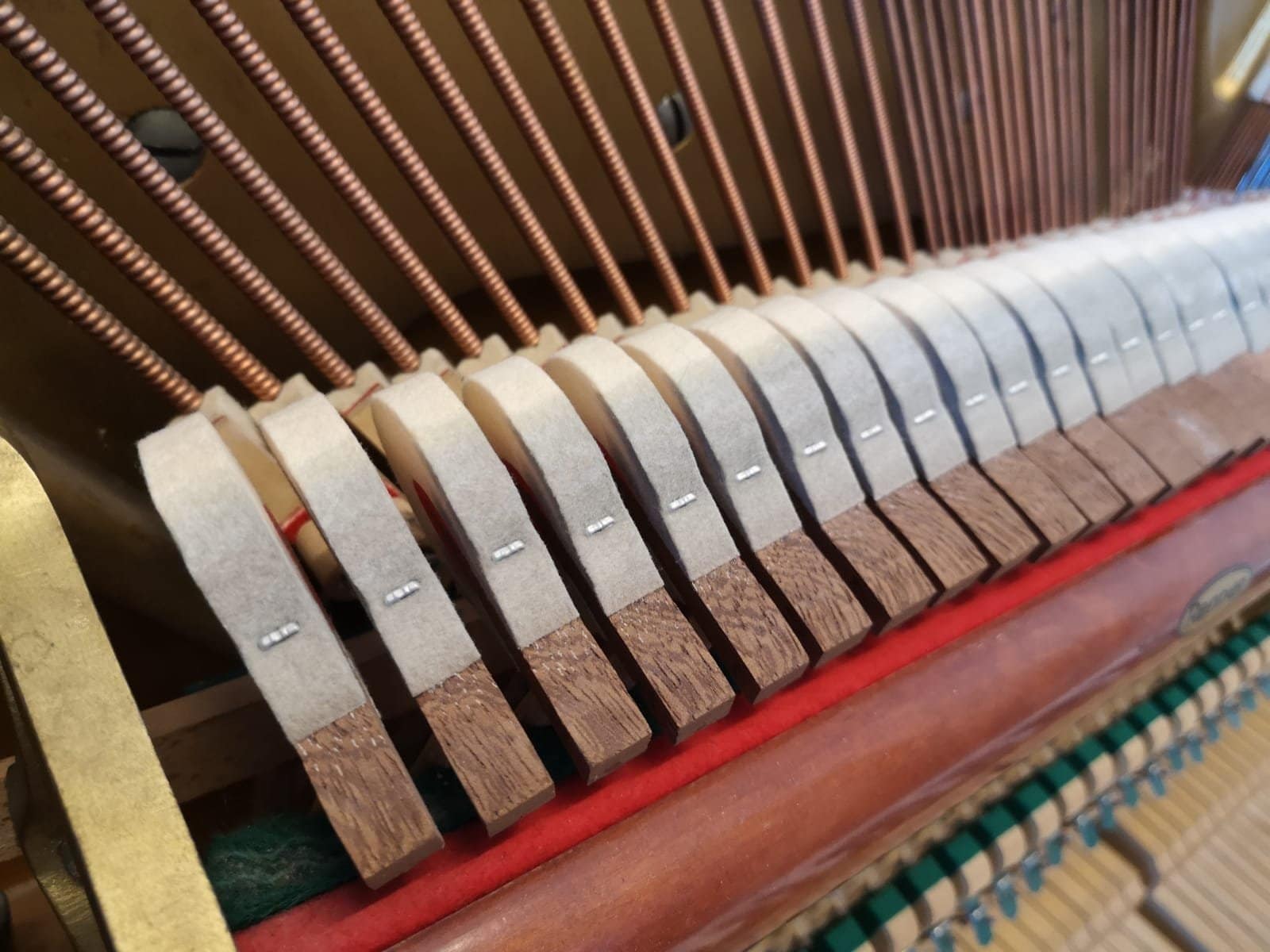
The tone is created at the moment the hammer felt meets the string. The hardness and shape of that felt decide bright or dark, soft or shrill. Voicing means working the felt until all the notes speak the same language.
How it is done
Check the shape. The hammer head has to meet the string on a narrow line; grooves cut in by playing are evened out.
Needling. Felt that is too hard is loosened at certain points. That takes away the harshness without smothering the tone.
Striking point. If the hammer does not sit centrally on the unison, the note sounds restless; it is aligned.
Evening out. Note by note, listened against its neighbours, so that no note jumps out of line.
What for
So that the instrument works in its room. The same piano sounds shrill in a tiled room and dull on carpet — the felt is where that is balanced out.
When it is not needed
On an instrument that is merely out of tune, voicing changes nothing. After a move it is almost never the answer either. Whoever works on the felt first covers up what the action is causing.
The order is not arbitrary
Whoever starts at the felt while the action runs unevenly is working against himself. That is why always in this order.
01 · STRINGS
Tuning
First the pitch. Without it you cannot hear what the action and the felt are doing.
02 · ACTION
Regulating
Then the travels and clearances between key and string, the same for all 88 notes.
03 · FELT
Voicing
Last the tone colour at the hammer head, once the touch is already right.
From the work
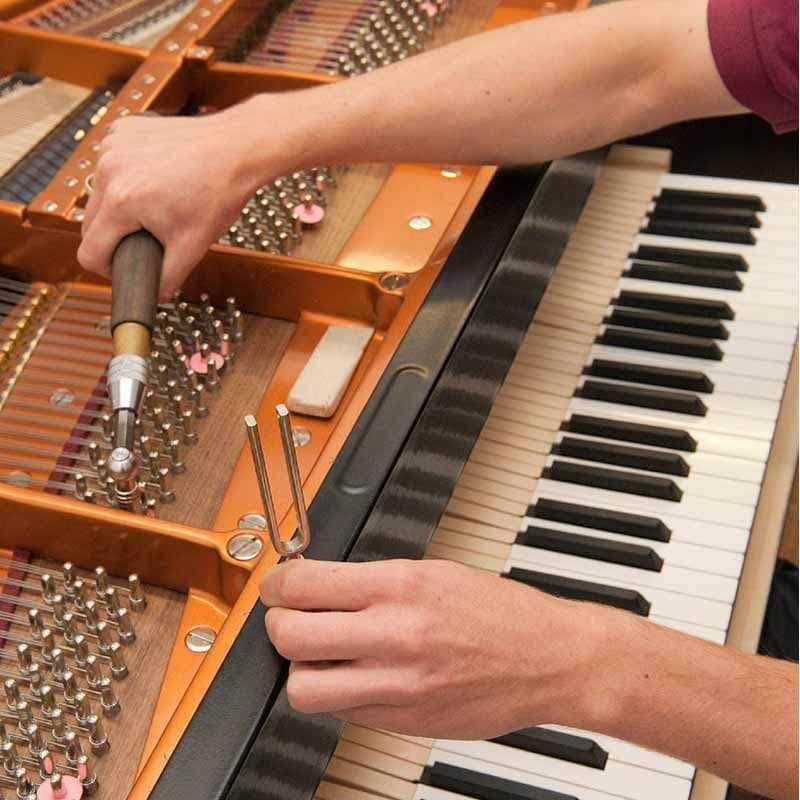
Three places where it is decided how an instrument sounds and how it plays.
Piano tuning Vienna:
one price, both instruments
Piano tuning has a fixed price, in Vienna with no travel surcharge. Regulation and voicing do not: they depend on the condition of felt, leather and wood and are discussed after the inspection.
and consultation
on request
cash or bank transfer
How the piano tuning appointment runs
01 · ENQUIRY
Instrument, district, last tuning
Three details are enough for the appointment.
02 · APPOINTMENT
Two time slots, you choose
By arrangement, including at the edges of the week.
03 · WORK
60 to 90 minutes at the instrument
Tuning to 440 Hz, with an eye on the action and the dampers.
04 · FINDINGS
Sound test, then two sentences
What was needed now, what can wait, what is not worth it.
Where it stands
Not against the outside wall, not next to the radiator, not in front of the south facing window. A metre away from the heating and a room that does not jump five degrees every day keep the tuning longer than any appointment.
Between two appointments
Keep the lid closed when the piano is not being played. Dust on the strings and in the felt costs more tone than half a year of playing.
When piano tuning is due again
A piano does not go out of tune because it is played, but because wood and felt work with the air in the room. Heating in winter, open windows in summer — both pull on the tuning. A silent piano also goes out of tune quite normally, because the mute function changes nothing about the string tension.
- 2×
- a year with regular playing. The drop is heard first in the middle register.
- 2–3
- weeks to wait after a transport , then tune. Before that the tuning does not hold.
- Autumn
- at the start of the heating season, a second appointment in spring. Dry air lowers the pitch.
- 442
- Hz on request; before a performance or a recording we tune on the day itself.
- 45 %
- to 55 % humidity in the room keeps the tuning longest. No spot by a radiator or a south facing window.
A piano tuner near you
Piano tuning in all 23 districts of Vienna, with no travel surcharge. The company is based in 2232 Deutsch-Wagram — Vienna and the immediate surroundings are the same trip.
For piano tuning in Lower Austria we add the kilometres from Deutsch-Wagram and give you the total on request.
1010 · 1020 · 1030 · 1040 · 1050 · 1060 · 1070 · 1080 · 1090 · 1100 · 1110 · 1120 · 1130 · 1140 · 1150 · 1160 · 1170 · 1180 · 1190 · 1200 · 1210 · 1220 · 1230 · 2232 Deutsch-Wagram · Gerasdorf · Groß-Enzersdorf
Several appointments in the same building or the same music school we put together on one day. Tell us the place and we will say when we are in the area.
What else we do
Tuning is one half. The other is the instrument's journey — from a move inside the house to a drive across the border.
Frequent questions about piano tuning
Ten questions that come up before almost every appointment. If yours is not among them, ask us directly.
On the phone it is quicker than through the form: instrument, district and when it was last tuned, then the appointment is set.
What does piano tuning cost in Vienna?
In Vienna 228 euros including VAT, travel included. The price is the same for upright and grand piano. In Lower Austria the kilometres from 2232 Deutsch-Wagram are added; we give you the total on request.
Does tuning a grand piano cost more?
No. A grand piano has more strings and a different action, but the rate stays the same: 228 euros including VAT in Vienna.
What is the difference between tuning, regulating and voicing?
Tuning concerns the strings and therefore the pitch. Regulating concerns the action between key and string, that is the touch. Voicing concerns the hammer felt, that is the tone colour. Three jobs in three places, and always in that order.
My piano plays unevenly. Does tuning help?
Usually not. Uneven touch, sticking notes and a missing pianissimo come from the action, that is regulation. We tune first, check the action while doing so and tell you what the cause is.
What does a regulation or voicing cost?
There is no price for that from a distance. The work depends on the condition of felt, leather and wood. We look at the instrument, discuss it with you and then tell you the scope.
How often is piano tuning needed?
Twice a year with regular playing: one appointment in autumn at the start of the heating season, one in spring. If the piano is rarely played, one appointment a year is enough to keep the pitch from drifting away.
How long does piano tuning take?
60 to 90 minutes. If the instrument sits more than about 30 cents flat, it needs two passes and therefore more time. We say that on site, before we start.
Piano tuning after a transport: when?
Two to three weeks after the move. Before that the instrument is still working with the air in its new room and the tuning does not hold. If we drove the transport ourselves, we arrange the appointment right away.
What pitch do you tune to?
To concert pitch 440 Hz. For playing with an orchestra or for a recording we tune to 442 Hz on request.
Piano tuning in Lower Austria as well?
Yes. The price for the tuning stays the same, plus the kilometres from 2232 Deutsch-Wagram. Tell us the place and we will tell you the total. For moves within the same region our page applies: Piano transport Lower Austria, for all federal provinces Piano transport Austria.
Does a silent piano need tuning too?
Yes, just as often as any acoustic piano. The mute function only stops the hammers in front of the strings, it changes nothing about the string tension. Especially after a system has been installed the instrument should be tuned. If you are thinking about retrofitting, you will find the details under retrofitting a silent piano.
Piano tuning Vienna at a glance
228 €
Tuning in Vienna
incl. VAT · upright and grand piano
120 €
Appraisal
Condition and value, in Vienna
60–90
minutes at the instrument
two passes from 30 cents
440
Hz concert pitch
442 Hz on request
What we do
Tuning, regulating, voicingOn upright and grand pianos, in the flat, in the hall and in the music school. Plus the appraisal of an instrument before a purchase or a sale.
We do not carry out repairs.
Regulation and voicing only get their scope after an inspection and consultation at the instrument.
Where and when
Vienna, all 23 districtsTravel within Vienna included. Lower Austria with kilometres from 2232 Deutsch-Wagram, total on request.
Mon–Fri 8:00–18:00
Appointments by arrangement, two time slots to choose from. After a transport two to three weeks later.
Who comes
MK Klavier Art, 2232 Deutsch-Wagrampersonal professional experience since 1995, in the team and in management, 5,0 from 100+ reviews. The same company that also transports instruments.
Appointment for piano tuning
Write us a short note about what it is about. If you notice something in the touch or the sound, add it — then we will look at it right at the appointment.
After the appointment you know three things: how the instrument stands, what was needed now and what can wait.
- Hours
- Mon–Fri 8:00–18:00, appointments by arrangement
- Area
- Vienna all districts · Lower Austria on request
- On site
- Space in front of the instrument, nothing else needed
5,0 · 100+ reviews · personal professional experience since 1995